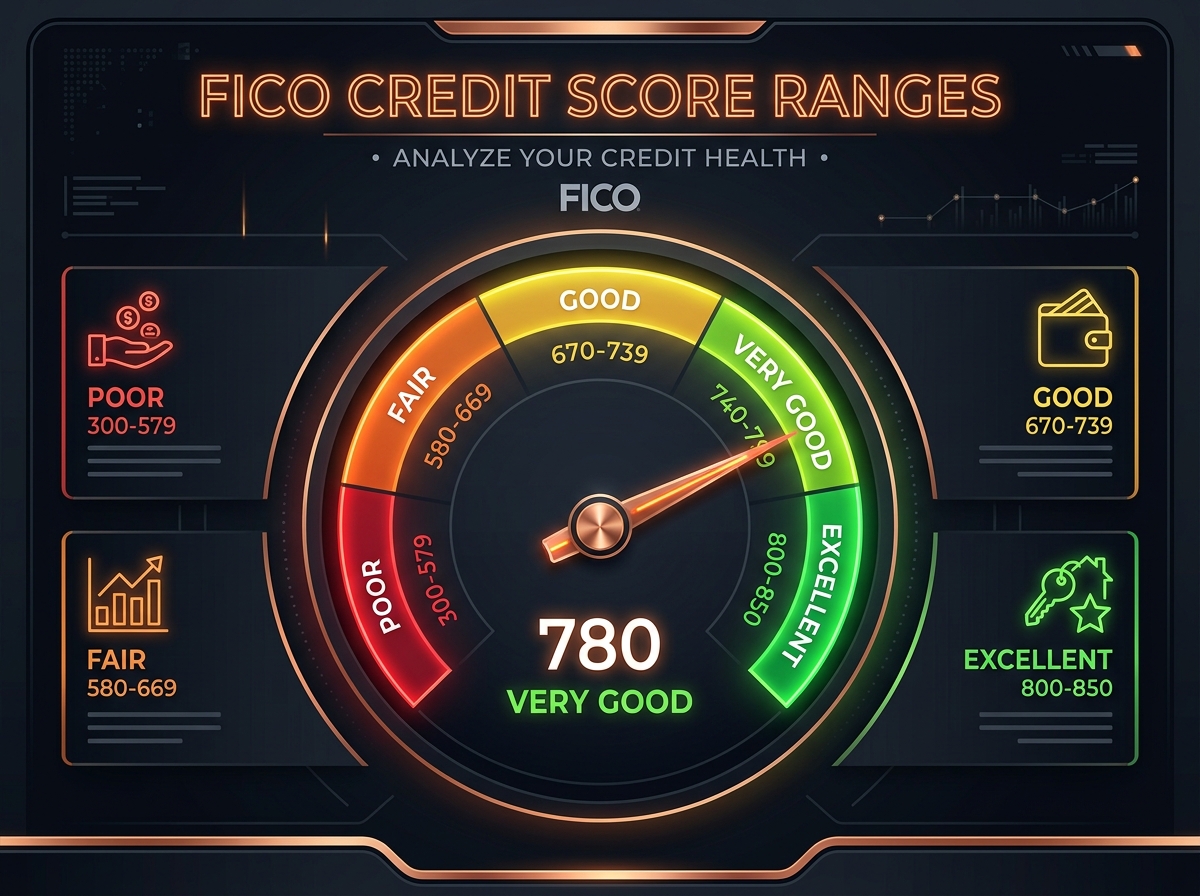
Understanding your FICO credit score
Your credit score is one of the most critical metrics in your personal financial life. The FICO score was introduced in the late 1980s by the Fair Isaac Corporation to provide lenders with an objective, standardized assessment of consumer credit risk based on historical borrowing behavior. FICO scores range from 300 to 850, with higher numbers representing lower credit risk.
Credit Score vs. Credit Report: What Is the Difference?
While often used interchangeably, a credit score and a credit report are distinct financial instruments. Your credit score is a numerical summary derived directly from the underlying data in your credit report.
A credit report is a detailed historical record maintained by the major credit bureaus (Equifax, Experian, and TransUnion) detailing:
- Open & Closed Accounts: Credit cards, mortgages, auto financing, and student loans.
- Payment Records: On-time payments, 30/60/90-day delinquencies, and collections.
- Credit Utilization: The ratio of outstanding revolving balances relative to total credit limits.
- Hard Inquiries: Formal credit applications submitted to potential lenders over the prior 24 months.
- Public Records: Chapter 7 or Chapter 13 bankruptcies, civil judgments, and liens.
Standard negative items generally remain on your credit report for seven years, while Chapter 7 bankruptcy public records can remain for up to 10 years. Under federal law, you are entitled to free annual credit reports from each nationwide bureau via AnnualCreditReport.com.
How is the FICO Credit Score Calculated? (The 5 Core Factors)
FICO algorithms evaluate your credit profile across five weighted categories. Understanding these weights helps prioritize which financial habits yield the largest score improvements:
- Payment History (35%): Your track record of making on-time payments across revolving and installment accounts is the single largest component.
- Amounts Owed / Credit Utilization (30%): How much credit you use compared to your limits. Keeping revolving balances below 30%—and ideally below 10%—substantially strengthens this factor.
- Length of Credit History (15%): Evaluates the age of your oldest account, newest account, and the average age of all open accounts.
- New Credit & Inquiries (10%): Opening several new credit lines within a short timeframe indicates higher risk and generates hard inquiries.
- Credit Mix (10%): Successfully managing a diverse blend of revolving accounts (credit cards) and installment loans (mortgages, auto loans) demonstrates borrowing maturity.
Why Your FICO Score Matters
Whenever you apply for emergency capital, auto financing, a home mortgage, or a personal credit card, prospective lenders evaluate your FICO score to determine approval eligibility, loan limits, and interest rates. Borrowers with excellent scores (750+) qualify for prime rates, saving thousands of dollars in interest charges over the life of a loan. Conversely, lower scores can restrict borrowing options to short-term emergency advances or require higher APR terms.
Actionable Steps to Improve Your Credit Score
Because credit bureaus update account data on a monthly billing cycle, proactive financial habits will begin showing positive results in 30 to 60 days:
- Pay All Accounts On Time: Set up automated minimum payments through your bank checking account to prevent accidental 30-day late reporting.
- Pay Down Revolving Debt: Target high-utilization credit cards first to quickly lower your aggregate revolving utilization below 30%.
- Keep Seasoned Accounts Active: Avoid closing old accounts with zero balances, as closing them reduces total available credit and lowers average account age.
- Review Reports for Inaccuracies: Dispute unauthorized collection notices or erroneous late marks directly with the reporting credit bureaus.